Dear parent,
I know that going through a separation or divorce can be an incredibly challenging time,
not only for you but importantly for your child too. As Children’s Commissioner for
England, my role is to champion children’s rights and wellbeing, and to make sure their
voices are heard, especially by the adults in their lives.
I am writing to you as an advocate for your child, to share some guidance that I hope will
support you in navigating this period of family change with confidence, compassion, and
a focus on what matters most: helping your child feel loved, secure, and supported.
Over many years of listening to children, one message comes through clearly: the
importance of family and loved ones. When I took up the post of Children’s
Commissioner, I asked children about their hopes, dreams and what was important to
them. I hoped family would be on the list, but I was surprised at just how much it matters.
What’s more, my own research shows it is the quality of relationships around a child – not
the family structure -that has the greatest impact on their wellbeing.
ii Family, in whatever form it takes, has a protective effect. Children cope far better when they know the adults they love are doing their best to work together, communicate calmly, and keep them
shielded from conflict. When children feel safe and emotionally supported by parents
who work as a team, even in difficult circumstances, they are far more likely to flourish.
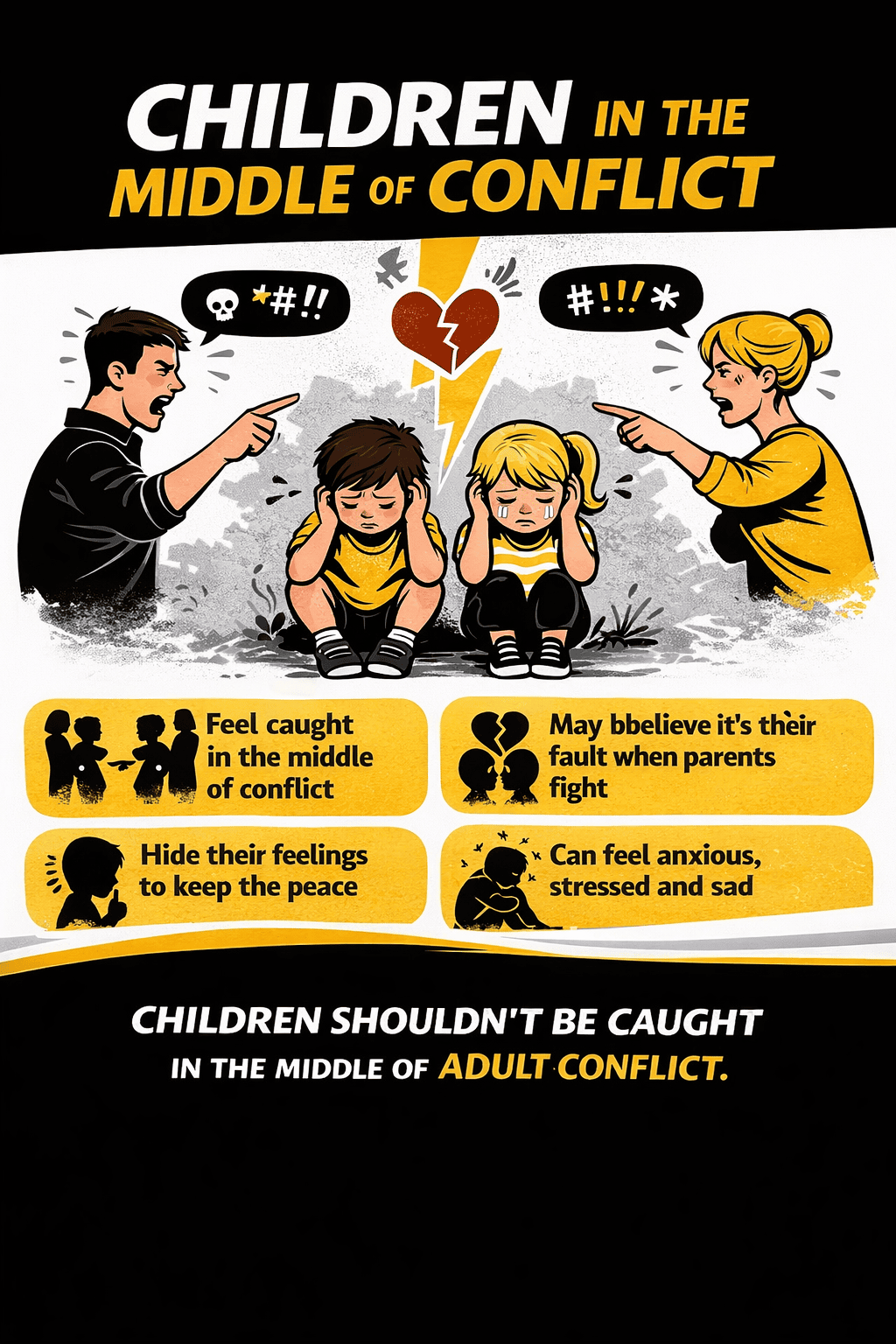
Sadly, the opposite is also true. There’s clear research to show the risk of harm to children
who are raised by parents in conflict with each other. Finding ways to manage a workable
parenting relationship, wherever safe to do so, will make all the difference to your child.
Research has consistently shown how parents manage a separation can have a profound
influence on the experience of childhood, both in the moment and in the years that
follow. Studies highlightiii that it is not separation itself that determines how children fare,
but the level of conflict to which they are exposed. Children tell us that what hurts them
most is being drawn into adult disagreements or feeling as though they must choose
sides. It’s far better not to think of there being ‘sides’ in a child’s family structure.
Children also benefit greatly when they feel heard. My role was established to represent
the views and experiences of children, so I encourage you to give your children the space
to share what matters to them during this transition, helping them feel valued and
respected. Listening to children does not mean always doing what they tell us they want,
but as parents, listening to your child’s perspective and consulting them on decisions that
are in the best interests of the whole family can strengthen trust.
Court action will be a necessary route for some families, especially when safety concerns
require it. In these circumstances the court’s role in safeguarding children and adults must
always come first – but it remains just as crucial to keep the impact on the child front and
centre to the process, while never compromising their safety. In cases where it is safe not
to involve the court, I urge you to consider other routes to resolve issues. Practitioners
working with children report that when children feel parents are ‘fighting for them’, they
feel caught in the middle, or even responsible for the conflict. This can, unintentionally,
create ruptures in relationships and affect wellbeing lasting far beyond the legal process.
Looking through a long-term lens is critical, no matter how challenging it feels today.
Being a parent is a privilege, but the responsibility can also be overwhelming. Your child
will continue to grow, change, and need both of you in different ways over the years
ahead. When parents manage to maintain workable, respectful relationships, even in
difficult times, it helps children feel safe and supported well into adulthood.
As you move through this process, I encourage you to keep your child’s wellbeing firmly
at the heart of your decisions. That includes considering how they will experience your
parenting dynamic in the future. Please do consider approaches that reduce conflict and
build cooperation. Where it is safe to do so, mediation (including child inclusive
mediation), coaching, separated parenting programmes and other supportive services
can help you communicate in ways that prioritise your child’s needs and reduce the strain
on all of you. These approaches can sit alongside any legal guidance you are receiving,
and I hope you feel able to explore them.
With warmest wishes,
Dame Rachel de Souza
Children’s Commissioner for England